
Twelve inches sounds like an oddly specific, almost arbitrary number until you actually measure it against a bookshelf, a curtain, or a stack of mail sitting on a side table — at which point it becomes immediately clear how many normal, entirely ordinary everyday candle placements fall well inside a distance that fire safety guidance considers genuinely, meaningfully risky.
The Actual Rule: Twelve Inches From Anything Flammable
Standard fire safety guidance from multiple fire prevention organizations calls for keeping a lit candle at least a full twelve inches away from anything that can realistically catch fire — curtains, books, paper, dried flowers, furniture with fabric upholstery, anything decorative made of paper or dried plant material. Twelve inches is farther than it sounds in a normal room; it rules out most mantels crowded with decor, most bookshelves, and most side tables pushed close to curtains, which is exactly why this specific guidance gets ignored so often even by people who’d say they take candle safety seriously.
The Surface Matters as Much as the Surroundings
A sturdy, heat-resistant, non-flammable surface is the second half of safe placement, separate from clearance around the candle. A hard tabletop, a stone or ceramic tray, or a purpose-built candle plate all work well for this; a wobbly side table, a stack of books used as an improvised stand, or any surface that isn’t genuinely stable enough to fully guarantee the candle won’t tip over do not, regardless of how sturdy they might look at first glance. The candle holder itself matters too — one wide and heavy enough to catch dripping wax and resist tipping from a light bump, not a narrow, top-heavy holder that turns a minor nudge into a real problem.
Drafts Change the Actual Clearance Needed
The twelve-inch rule assumes still air. A window left slightly cracked open, a ceiling fan running overhead on even a low setting, or a heating vent blowing directly across a candle’s location all extend how far a flame can actually reach beyond its normal, still-air height — a gust can push a flame sideways toward something that measured a safe twelve inches away under normal conditions. Placing candles away from drafts entirely is the more reliable fix, rather than trying to calculate an adjusted safe distance for a specific breeze on a specific day.
Shelves and Mantels Deserve Extra Scrutiny
A mantel or shelf is one of the most common candle locations and also one of the easiest places to accidentally violate the twelve-inch rule, since these surfaces tend to accumulate decor over time — photo frames, dried flowers, greenery, holiday decorations — without anyone stepping back to reassess the full picture once it’s built up. It’s worth doing a genuine, deliberate walk-around of any shelf or mantel holding a candle, checking actual measured distance to the nearest flammable item rather than trusting a general visual impression that everything looks “spread out enough.”
Bathrooms and Bedrooms Carry Their Own Specific Risks
Bathrooms often seem like an obviously safe candle location at first glance — tile floors, minimal furniture, nothing that reads as an obvious fire hazard — but towels, toilet paper, and shower curtains are all genuinely flammable and often sit closer than twelve inches to where a candle typically gets placed on a vanity or windowsill. Bedrooms carry a different, more serious concern: bedding is highly flammable, and roughly a third of home candle fires start in the bedroom, a meaningful share of those tied specifically to sleep — meaning a candle burning as someone drifts off is a recurring, real pattern behind actual incidents, not a rare edge case worth dismissing.
Where Placement Guidance Actually Comes From
This isn’t arbitrary caution — it traces directly back to how actual candle fires start. A large majority of them begin because something flammable was positioned too close to a burning candle, which is precisely the failure mode the twelve-inch rule and stable-surface guidance are built to prevent. Treating placement as a one-time setup decision rather than something worth periodically rechecking is the actual gap between knowing the rule and it doing real, ongoing work in a home that changes and accumulates decor over time.
Holiday and Seasonal Décor Creates a Predictable Annual Risk Spike
Fire departments across the country consistently report candle-related house fires spiking noticeably around the winter holidays specifically, and the mechanism is straightforward once named: seasonal decorating adds dried greenery, wrapping paper, ribbon, and paper decorations into rooms that already have candles in their normal locations, shrinking the actual clearance around each one without anyone deliberately deciding to place a candle closer to something flammable. Advent displays, holiday centerpieces, and mantel arrangements are common offenders specifically because they’re built up gradually over several weeks, the same slow-accumulation pattern that makes ordinary shelf and mantel clutter easy to stop noticing. Treating the holiday season as a trigger to re-walk every candle location in the house, not just a time to add more candles, catches a real seasonal spike before it becomes a personal one.
Renters Have a Few Extra Considerations Worth Knowing
Beyond general fire safety, renters specifically should know that many renters and homeowners insurance policies do cover candle-related fire damage as a standard peril, but a policy can be contested or a claim reduced if the fire resulted from clear, demonstrable negligence — leaving a candle unattended overnight, for instance, is exactly the kind of documented behavior that can complicate a claim rather than support one. This isn’t a reason for alarm, since most candle use never approaches that territory, but it’s a real, practical reason the behavioral habits in this guide matter beyond the immediate physical safety they provide.
Smoke Alarms Are the Backstop, Not the Primary Plan
A working smoke alarm in any room where candles regularly burn is worth confirming specifically, not just assumed to be fine because the whole house technically has coverage. Alarms with dead or missing batteries are a genuinely common finding investigators note after house fires, precisely because they’re the kind of maintenance item that’s easy to forget about for months or years at a time. This is a backstop, not a substitute for the placement and attention habits described throughout this page — the alarm’s whole job is catching the failure that already happened, while everything above is aimed at preventing that failure in the first place.
A Practical Placement Checklist
Before lighting a candle in a new spot for the first time, run through it deliberately rather than by feel: is the surface stable and heat-resistant, is everything flammable genuinely twelve inches clear in every direction including above, is the location away from any draft source, and is it somewhere that stays within view rather than tucked into a corner that’s easy to forget about once other things demand attention. Doing this once per new location, rather than every single time a candle gets lit, is enough — the goal is catching a genuinely unsafe spot before it becomes a habitual one that nobody thinks to question again.
It’s worth writing this checklist down somewhere, or at least running through it out loud the first time, rather than trusting it to stick after reading it once. Genuinely internalizing a habit like this takes repetition, and the payoff — a home where every candle location has actually been checked rather than assumed safe — is disproportionate to the small, one-time effort involved in doing it properly the first time around.
Above Counts as a Direction Too
The twelve-inch clearance rule applies in every direction, and “above” is the one people forget most often. A candle placed under a shelf, a hanging plant, or a low light fixture can technically clear twelve inches on every side while still sitting well under twelve inches of vertical clearance to whatever’s directly overhead — heat rises, and a flame’s actual heat output extends meaningfully upward even when the visible flame itself looks small and contained. Checking overhead clearance specifically, not just the surrounding tabletop, catches a genuine blind spot in how most people instinctively evaluate a candle’s surroundings.
Moving a Candle While It’s Lit Is Its Own Separate Risk
It’s tempting to relocate a lit candle from one room to another rather than extinguishing and relighting it, especially with a scent that’s working well in a space. This is worth avoiding as a habit — a lit candle carried through a home is exposed to every doorway, draft, pet, and person in its path, none of which factored into the safe placement it started in. If a candle needs to move rooms, extinguishing it first and relighting it in the new, already-checked location takes a few extra seconds and removes an entirely avoidable window of risk.
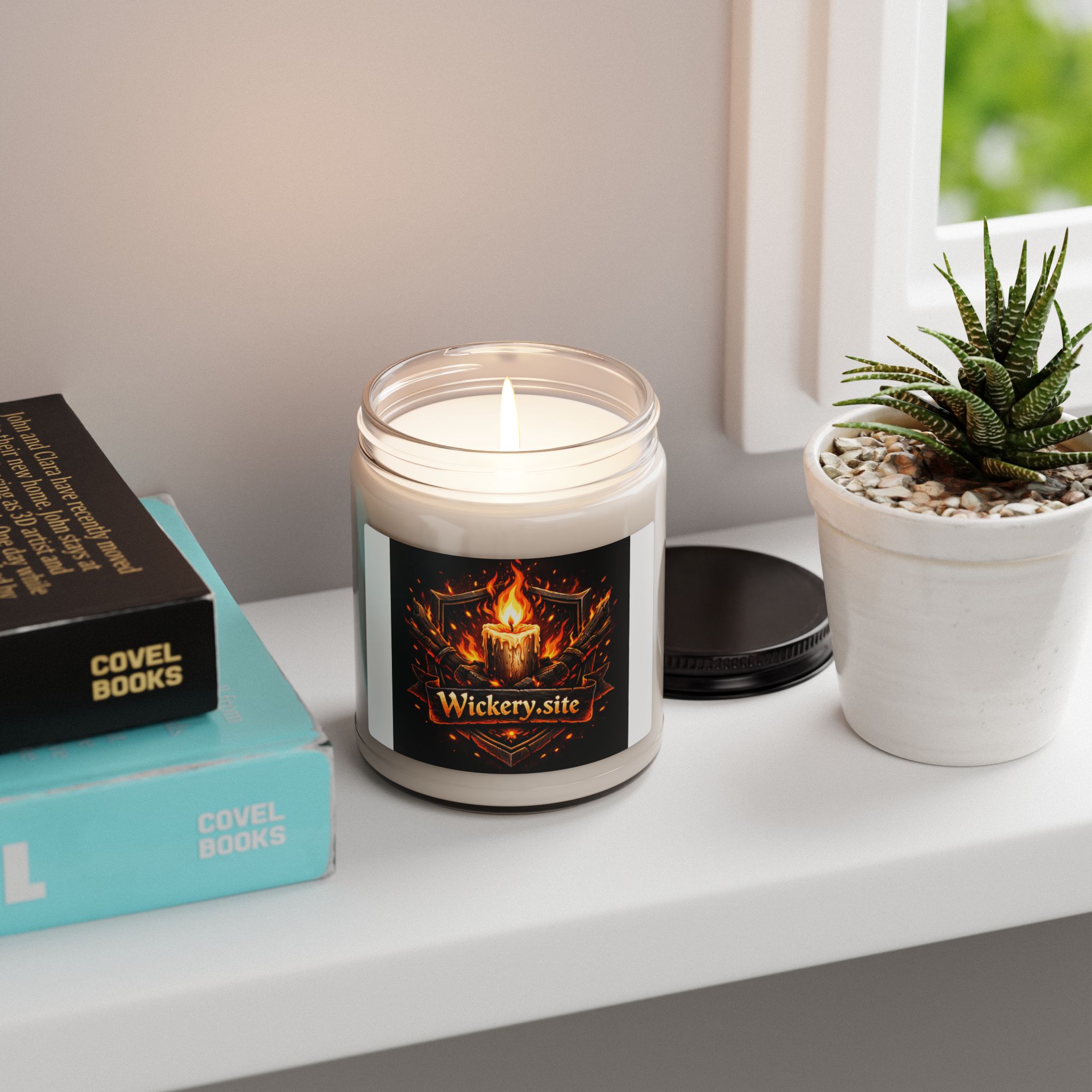
Wickery’s Hearthlight candles ship in a weighted, wide-based glass jar built to resist tipping — a real help with the surface half of this equation, though clearance and placement are still entirely, and always, up to where it actually gets set down in a given room.